12V RV Marine 14.6V 10A Battery Charger
One unit for 12V lithium, lead-acid and LiFePO4 banks at 10A, so a workshop can stock a single model instead of three chemistry-specific chargers.
| Input Voltage | 100-240V AC |
|---|---|
| Output | 14.6V 10A |
| Efficiency | >88% |
| Protection | OVP/OCP/SCP/OTP |
Overview
The YZ270 handles 12V lithium, lead-acid and LiFePO4 batteries at 10A. One unit across all three chemistries.
Which packs this charger suits
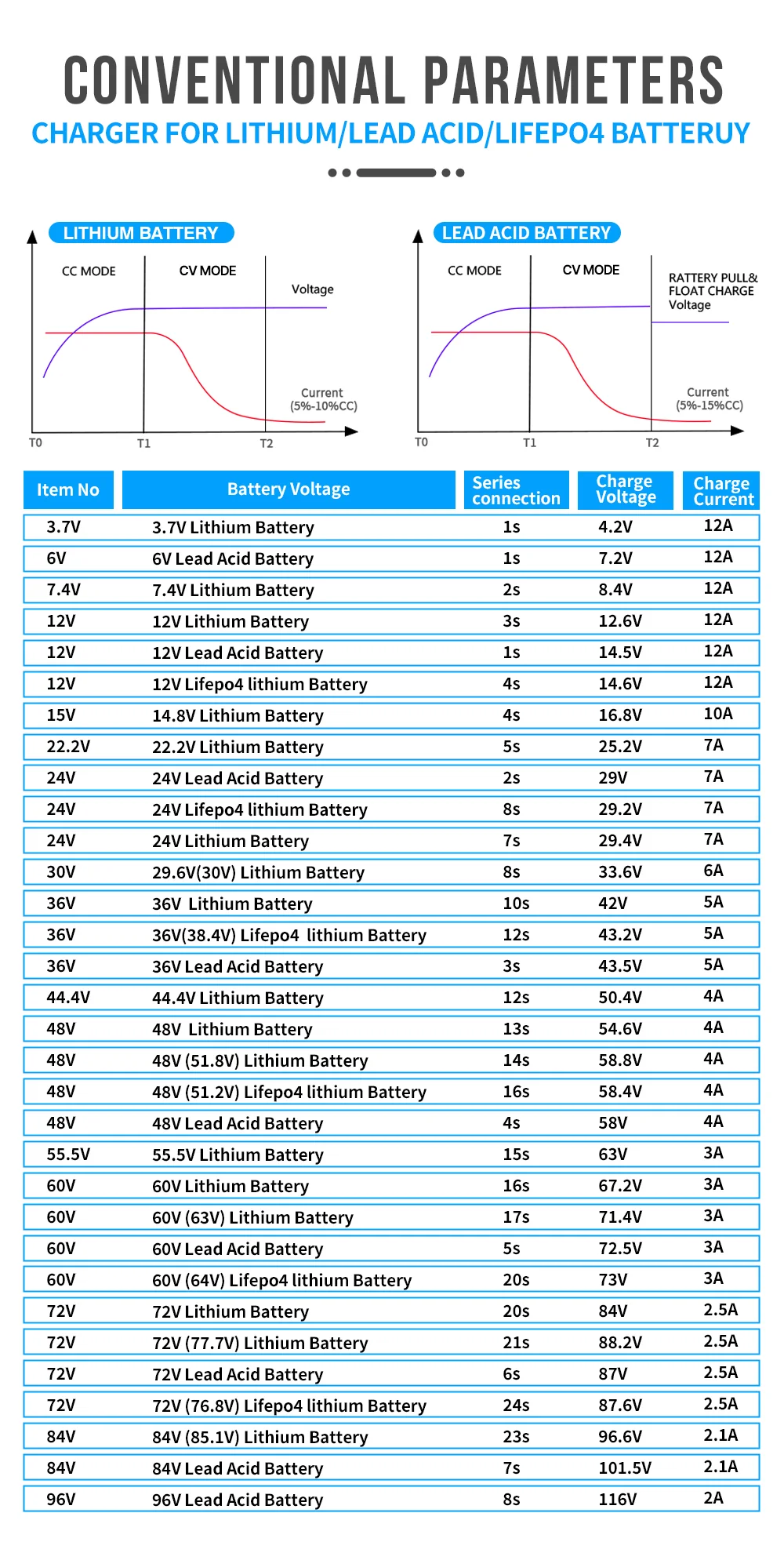
The 12.6V setting suits 3S lithium-ion, the pack sold as 11.1V. The 14.6V setting suits 4S LiFePO4 and 12V lead-acid absorption (14.4-14.7V).
Do not run the 14.6V setting on a 3S pack - it will overcharge it. For 24V packs this is the wrong voltage class; the 29.4V and 29.2V builds cover those.
Specifications
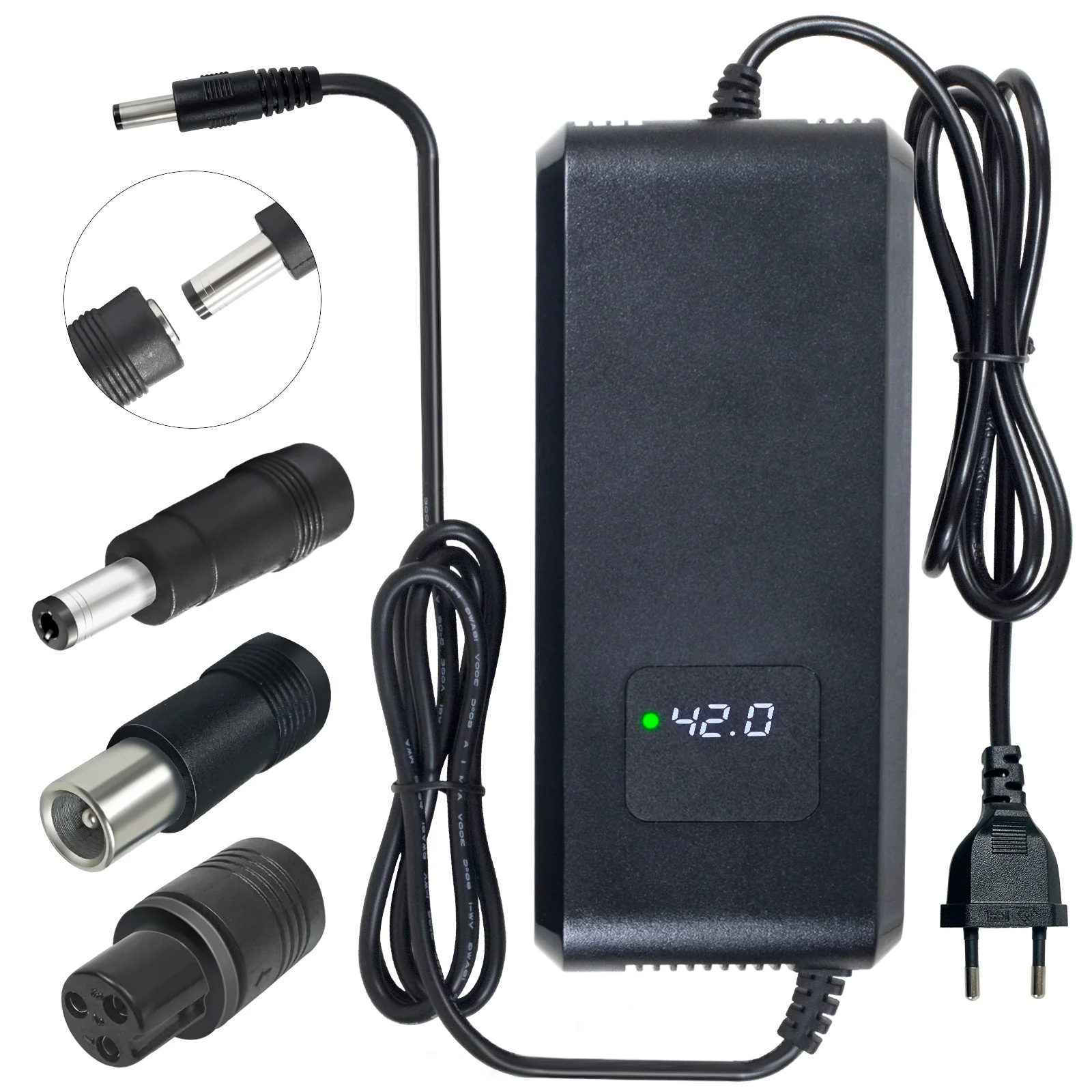
Model Comparison
10A across lithium, lead-acid and LiFePO4. The XM19520 sits just below at 8A on the same 12V duty; the 40A YZ800S above it is the step up when charge time matters more than cost.
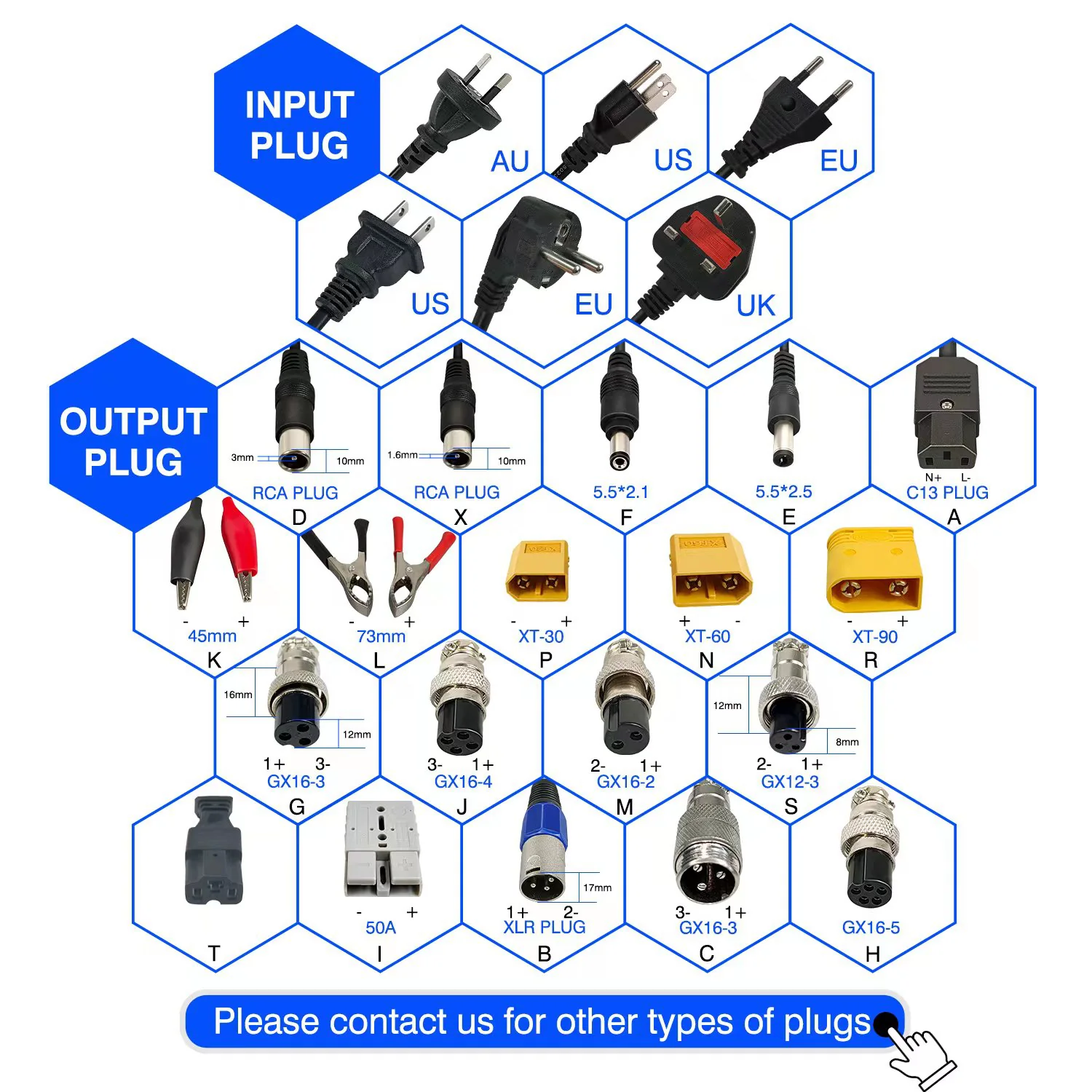
Connectors and plugs

One unit, three chemistries
Most 12 V chargers are built for one chemistry and are wrong for the other two. This one carries two output settings: 12.6 V for 3S lithium-ion, and 14.6 V for 4S LiFePO4 and for 12 V lead-acid absorption, which sits at 14.4-14.7 V. A workshop that services mixed packs can stock a single model instead of three, and the setting that matters is written on the label rather than buried in a menu.
Why the two settings exist
A 3S lithium-ion pack is 3 cells at 4.2 V, so 12.6 V at full charge - the pack sold as 11.1 V. A 4S LiFePO4 pack is 4 cells at 3.65 V, so 14.6 V - the pack sold as 12.8 V. Lead-acid at 12 V is 6 cells at 2.4-2.45 V, so 14.4-14.7 V. The gap between 12.6 V and 14.6 V is the difference between a 3S pack and everything else, and putting the 14.6 V setting on a 3S pack overcharges it. That is the one mistake this charger lets you make, so it is worth labelling the packs on the bench.
How long a charge takes at 10 A
10 A suits packs from roughly 20 Ah to 120 Ah. A 20 Ah pack is about two hours at full current, a 50 Ah pack about five, a 100 Ah pack about ten, before the constant-voltage taper. Below 20 Ah the current is more than the pack wants; above 120 Ah the wait becomes the constraint rather than the price.
Where it sits in the range
10 A. The XM19520 is the 8 A step below on the same 12 V duty, for smaller packs or tighter budgets. The YZ800S at 40 A is the step up when charge time matters more than cost - same chemistries, four times the current.
Packs this charger is not built for
It is a 12 V charger. A 24 V pack needs 29.4 V (7S lithium-ion) or 29.2 V (8S LiFePO4), and 14.6 V will not bring it up. It is also not a 12 V maintainer for a battery that stays connected for months - it is built to charge a discharged pack, not to sit on one indefinitely.
Ratings
Input 100-240 V AC. Output 14.6 V at 10 A; 12.6 V setting for 3S lithium-ion. Efficiency above 88%. Protection: over-voltage, over-current, short-circuit and over-temperature.
MOQ / lead time / warranty · 1 unit · 10-15 working days · 1 year
FAQ
Can it charge a 12 V car battery? Yes - a 12 V lead-acid battery is 6 cells and 14.6 V sits inside its absorption window. Check the capacity: 10 A suits packs up to about 120 Ah.
What happens if I use 14.6 V on a 3S pack? It overcharges. Use the 12.6 V setting; the series count decides the voltage.
Do I need a different charger for gel and AGM? No - both sit in the same 14.4-14.7 V absorption window as flooded lead-acid.
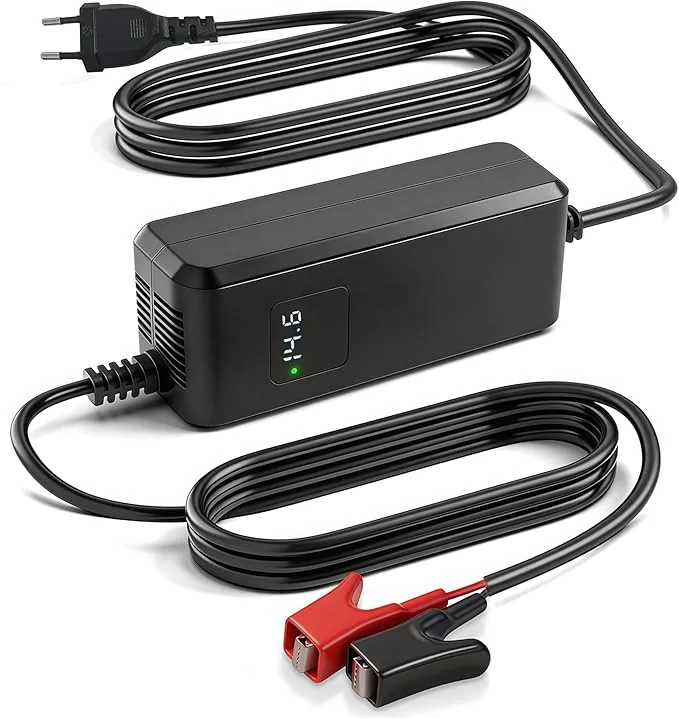
Related models
Other chargers built for the same battery system, from the same factory: